Tag: Buying Guides

Mindray Z60 Vet vs. M9Vet: Which Ultrasound Fits Your Caseload?

Mindray Z60 Vet vs. M9Vet

Mindray Z60 Vet vs. M9Vet: Which Ultrasound Fits Your Caseload?

If you’ve already worked through the fundamentals of choosing a system, the real decision usually comes down to comparing two specific machines against what you actually scan day to day. The Mindray Z60 Vet and the M9Vet sit at different points in Mindray’s veterinary lineup, and the gap between them is bigger than a simple “good vs. better” story. The M9Vet is a genuinely premium platform, but it makes real trade-offs to get there — and those trade-offs are worth understanding before you assume more advanced automatically means better fit.

Here’s an honest, spec-accurate comparison, built around the clinical decisions that actually separate these two systems.

The core difference: general-purpose imaging vs. a cardiac-grade quantitative platform

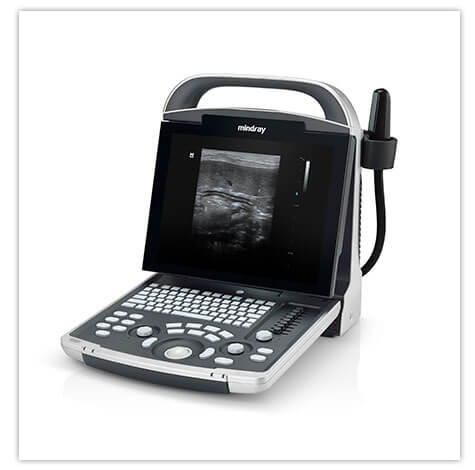
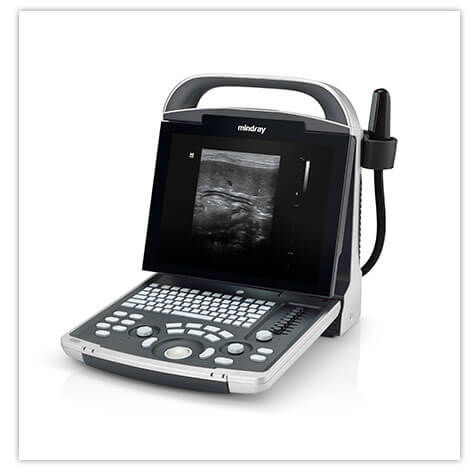
The Z60 Vet is a well-rounded, mid-tier system built for general companion and large-animal imaging. It includes Tissue Doppler Imaging, 3D/4D imaging options, Mindray’s Phase Shift Harmonic Imaging, and the standard iClear/iTouch/iZoom/iBeam toolkit, all on a 15-inch, 60-degree tilting screen with 1TB of storage and two probe connectors.

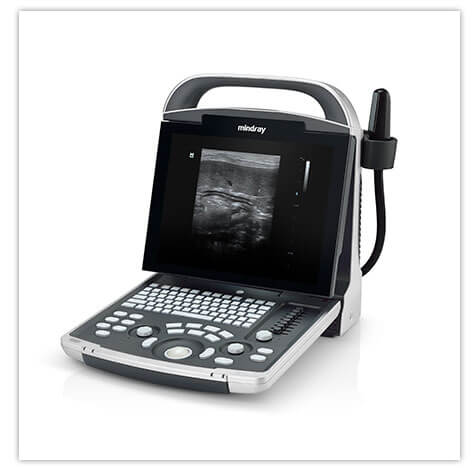
The M9Vet is built around a different mission entirely. It centers on Mindray’s mQuadro platform and 3T single-crystal transducer technology, adds Tissue Tracking with Quantitative Analysis, and includes Echo-Enriched Beam Forming alongside Tissue Harmonic Imaging and Phase Shift Harmonic Imaging. Its probe catalog is the most extensive in Mindray’s veterinary lineup, and critically, it’s the only system in this comparison with true phased-array cardiac probes — the transducer type built specifically for cardiac imaging through the narrow acoustic windows between ribs.

That’s the real dividing line. If cardiology or advanced quantitative imaging is a defined part of your practice, the M9Vet is built for that work in a way the Z60 simply isn’t. If your caseload is general abdominal, soft-tissue, and reproductive imaging with occasional Doppler work, the Z60’s toolkit already covers that ground well, and the M9Vet’s specialized capability would go underused.

Transducer technology: where the M9Vet’s premium positioning is genuine, not marketing

It’s worth being specific about what “3T single-crystal transducer technology” actually means, because it’s easy to wave past as a spec-sheet buzzword when it’s actually a meaningfully different manufacturing approach.

Most ultrasound transducers use piezoelectric ceramic elements to convert electrical signals into sound waves and back. Single-crystal transducer material is a different class of material entirely, with substantially higher electromechanical conversion efficiency — more of the electrical energy put into the crystal converts into usable acoustic energy, and more of the returning echo converts back into a clean electrical signal. In practical terms, that generally translates into better penetration at a given frequency, improved contrast resolution, and cleaner images in technically difficult patients, without the compromises that usually come from just cranking up gain on lower-efficiency elements.

Combined with Echo-Enriched Beam Forming and the mQuadro platform underneath it, the M9Vet’s imaging pipeline is a genuine step up in raw image formation, not just an accessory feature layered on top of the same core hardware as the Z60.

Tissue Tracking with Quantitative Analysis: a capability the Z60 doesn’t have at all

This is the single feature most likely to be the deciding factor for a cardiology-forward practice, and it’s exclusive to the M9Vet in this comparison.

Tissue Tracking with Quantitative Analysis allows the system to measure and track the movement and deformation of cardiac tissue over time rather than relying purely on visual assessment, giving you objective, repeatable numbers for things like wall motion and contractility rather than a qualitative read. That’s meaningfully different from Tissue Doppler Imaging alone (which the Z60 offers), since Doppler measures velocity at a point while quantitative tissue tracking builds a fuller picture of tissue mechanics over the cardiac cycle. For a practice doing serious cardiac workups, referral cardiology, or research-adjacent imaging, that’s not a marginal upgrade — it’s a different tier of capability entirely.

For a practice where cardiac imaging means confirming a murmur or checking chamber size on a routine wellness scan, this capability will likely go unused, and the Z60’s Tissue Doppler Imaging plus standard PW Doppler is enough for that level of work.

The trade-offs: storage and probe connectors

This is the part of the comparison that’s easy to miss if you only look at the headline imaging specs, and it’s worth flagging clearly because it runs counter to the assumption that the more premium machine is better equipped across the board.

Storage: The Z60 Vet includes 1TB of onboard storage. The M9Vet includes 256GB — a quarter of the Z60’s capacity. For a practice archiving large volumes of studies, video loops, or 3D/4D captures locally on the machine rather than offloading regularly to PACS or a local server, that’s a real practical difference worth planning around.

Probe connectors: The Z60 Vet has two probe connectors, letting you keep two transducers plugged in and switch between them mid-exam without stopping to swap cables. The M9Vet has only one. Given that the M9Vet’s whole probe catalog runs to 17 options — the largest in this lineup, including multiple phased-array and linear probes for different exam types — having only a single connector means more physical probe-swapping during a workflow that might reasonably call for two or three transducers in the same visit (general abdominal, then cardiac phased-array, for instance).

Neither of these is a dealbreaker on its own, but together they’re a genuine workflow consideration, not a footnote. It’s worth asking directly at quote stage whether a multi-connector adapter or docking accessory is available for the M9Vet if this is a concern for your team.

Screen, interface, and day-to-day usability

The Z60 Vet uses a 15-inch screen with a 60-degree tilting angle. The M9Vet’s screen is slightly larger at 15.6 inches, though Mindray’s published specs don’t list a tilt range for it the way they do for the Z60 — worth confirming directly if screen positioning flexibility matters to your exam room setup.

Both systems share the same core image-optimization toolkit: iClear for speckle reduction, iTouch for one-click optimization, iZoom for full-screen viewing, and iBeam for compounding scan angles into a single image. Day-to-day navigation should feel broadly familiar moving between the two, even though the M9Vet’s underlying image-formation technology is more advanced.

Battery and charge time

Both systems offer approximately 1.5 hours of scanning time on their rechargeable batteries. Charge time is where they differ slightly: the Z60 Vet recharges in about 3 hours, while the M9Vet takes closer to 4 hours. For a single-system practice running back-to-back appointments, that extra hour matters more than it might first appear — worth factoring into how you plan charging windows between clinic days.

DICOM 3.0

Neither system includes DICOM 3.0 as standard — it’s listed as optional on both the Z60 Vet and the M9Vet. If PACS integration or referral image-sharing is part of your workflow, budget for that add-on regardless of which of these two systems you choose, and confirm current pricing with your rep at quote stage.

Species range and transducer flexibility

Both systems are positioned for companion and large-animal work, but the M9Vet’s probe catalog is substantially broader — 17 listed options versus the Z60’s 11. The most clinically significant difference is the M9Vet’s phased-array probes (the P-series and Sp5-1s), purpose-built for cardiac imaging through narrow intercostal windows, which the Z60’s catalog doesn’t include at all. The M9Vet also extends further into high-frequency linear imaging, with options running up to 23MHz for superficial and small-parts work, compared to the Z60’s linear probes topping out around 16MHz.

If your practice does any meaningful volume of cardiac echocardiography, the M9Vet’s probe catalog is built for that work specifically. If your large-animal and small-parts imaging needs are general rather than cardiology-specific, the Z60’s transducer range already covers that ground.

Matched to your actual practice profile

Spec comparisons are useful, but most clinics find it easier to decide by seeing where they actually fit:

General practice with routine Doppler, reproductive, or soft-tissue imaging needs. The Z60 Vet’s Tissue Doppler Imaging, 3D/4D options, larger onboard storage, and dual probe connectors make it the more practical day-to-day system without paying for capability you won’t use.

Cardiology-forward or referral practice doing regular echocardiography. The M9Vet’s single-crystal transducer technology, phased-array cardiac probes, and quantitative tissue tracking are purpose-built for that work in a way nothing else in this comparison matches.

High-volume practice archiving studies locally rather than to PACS. The Z60 Vet’s 1TB of storage is four times the M9Vet’s 256GB — worth weighing seriously if you’re not offloading images regularly.

Practice running multiple exam types back-to-back without time to swap probes. The Z60 Vet’s two probe connectors are a real workflow advantage over the M9Vet’s single connector, particularly given how broad the M9Vet’s own probe catalog is.

Side-by-side summary

Mindray Z60 Vet Mindray M9Vet
Screen 15″ HD LCD, 60° tilt 15.6″ HD LED
Core imaging Tissue Doppler Imaging, 3D/4D options, PSH Tissue Harmonic Imaging, PSH, Echo-Enriched Beam Forming, Tissue Tracking w/ Quantitative Analysis
Transducer technology Standard 3T single-crystal
Cardiac-specific probes Not offered Phased-array (P-series, Sp5-1s)
DICOM 3.0 Optional Optional
Storage 1TB 256GB
Probe connectors 2 1
Probe catalog 11 options 17 options
Battery ~1.5 hrs scanning, ~3 hr charge ~1.5 hrs scanning, ~4 hr charge
Notable extra Waterproof keyboard cover Single-crystal transducer tech
Best fit for General small/large-animal imaging, routine Doppler Cardiology-forward or referral practices, quantitative cardiac analysis

The financing question

Both systems are eligible for financing, which changes the calculus for a lot of practices. Spread over the equipment’s useful life, the monthly difference between the two is often smaller than the upfront price gap suggests — particularly once you weigh it against whether cardiac-grade quantitative imaging would get used regularly in your specific caseload, versus paying for capability that sits idle.

Still deciding?

The right answer here depends less on which system has the more advanced spec sheet and more on whether cardiology or quantitative cardiac analysis is a defined, recurring part of your practice. A general small-and-large-animal practice has different priorities than a referral-adjacent clinic building out echocardiography services.

If you want to browse the full ultrasound lineup or talk through which system actually fits your case mix, request a quote and we’ll walk through it against your specific caseload — not just the spec sheet.

New to point-of-care ultrasound on your team? Our training programs cover both systems, whether you’re building Doppler proficiency or getting comfortable with cardiac-specific imaging.

Request a Quote →


FAQ Block

Q: What is the main difference between the Mindray Z60 Vet and M9Vet? A: The Z60 Vet is a general-purpose mid-tier system with Tissue Doppler Imaging and 3D/4D options. The M9Vet is a premium platform built around single-crystal transducer technology, phased-array cardiac probes, and Tissue Tracking with Quantitative Analysis — capability aimed specifically at cardiology and advanced quantitative imaging.

Q: Does the M9Vet have more storage than the Z60 Vet? A: No — the Z60 Vet includes 1TB of onboard storage, while the M9Vet includes 256GB. This is worth factoring in if your practice archives studies locally rather than offloading regularly to PACS.

Q: Which system is better for cardiac imaging? A: The M9Vet, by a clear margin. It’s the only system in this comparison with true phased-array cardiac probes, and its Tissue Tracking with Quantitative Analysis gives objective, repeatable measurements of cardiac tissue motion that Tissue Doppler Imaging alone doesn’t provide.

Q: How many probe connectors does each system have? A: The Z60 Vet has two probe connectors, allowing two transducers to stay plugged in during an exam. The M9Vet has only one, which means more manual probe-swapping if your workflow calls for multiple transducer types in the same visit.

Q: Does either system include DICOM 3.0 standard? A: No — DICOM 3.0 is listed as an optional add-on on both the Z60 Vet and the M9Vet. Confirm current pricing and availability with your rep if PACS integration is part of your workflow.

Choosing the Right X-Ray Table and Generator Setup for Your Veterinary Clinic

INTRIQUIP BLOG COVER

Vet school covers how to read a radiograph. It doesn’t cover how to actually configure the room it comes from — table type, generator power class, electrical requirements, or how a dental unit fits into the same imaging suite. That’s not a curriculum gap by accident; it’s a facilities and equipment decision, and most of us only really learn it when we’re standing in an empty exam room trying to figure out what to buy.

This guide walks through the practical side of configuring a fixed veterinary x-ray setup: table types, generator power considerations, installation logistics, and how a separate dental unit fits into the picture — the kind of decision that shapes your clinic’s workflow for the next decade, not just the next radiograph.

Table Configuration: 4-Way Float vs. Floor Track

The table underneath the generator affects positioning speed and patient safety as much as the generator itself does:

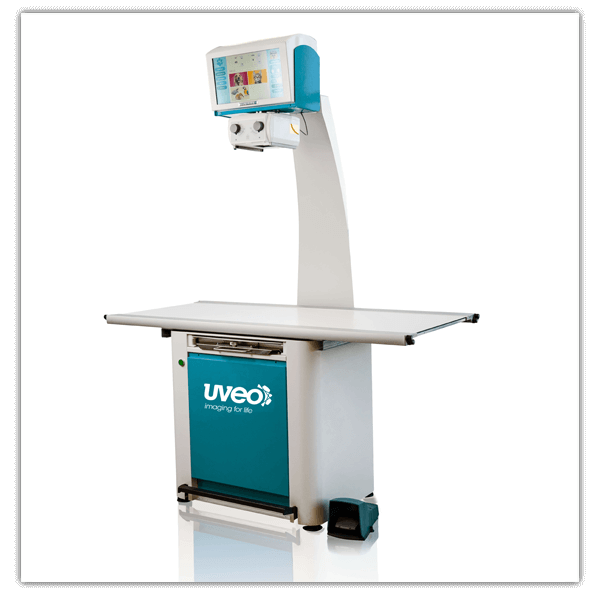
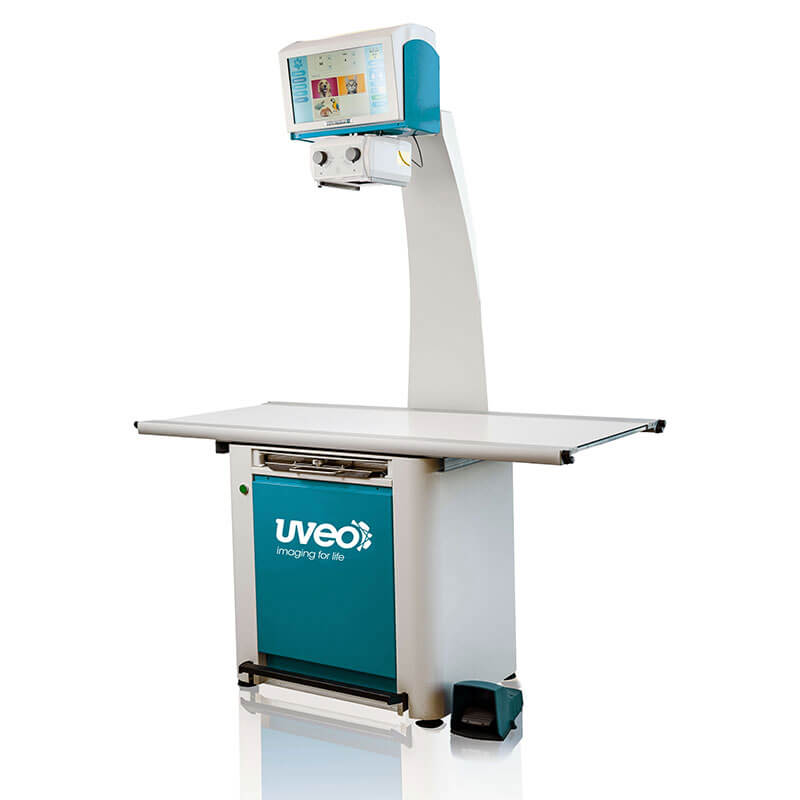
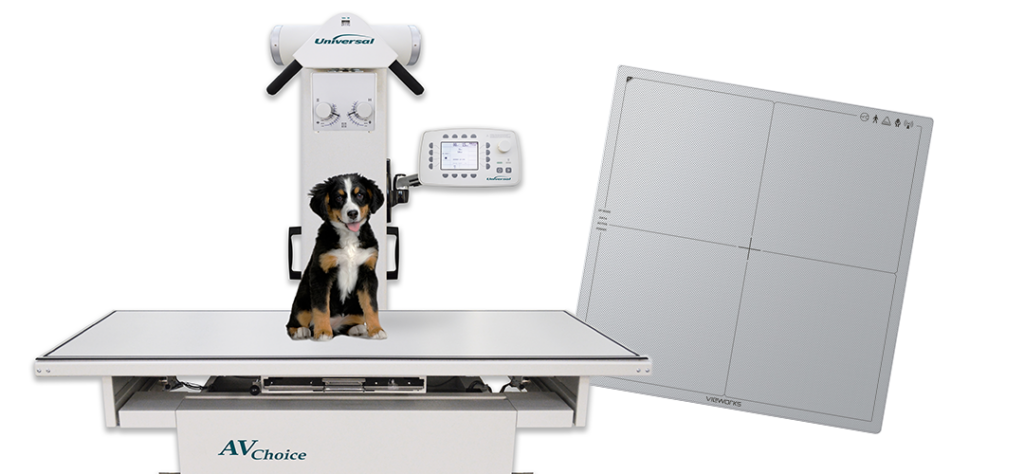
  • 4-way floating tabletop. A table that moves freely in all directions lets you position a patient once and move the table around them, rather than repeatedly lifting or shifting the animal. This matters most with larger, painful, or sedated patients where minimizing movement is a real welfare consideration, not just a convenience. Intriquip’s Uveo HF400 Complete Plus offers an enhanced four-way float range (600mm left-right, 200mm front-back) built around exactly this need.

UVEO HF 400 Complete Plus Digital Radiography Solution for veterinary imaging, available at Intriquip Canada

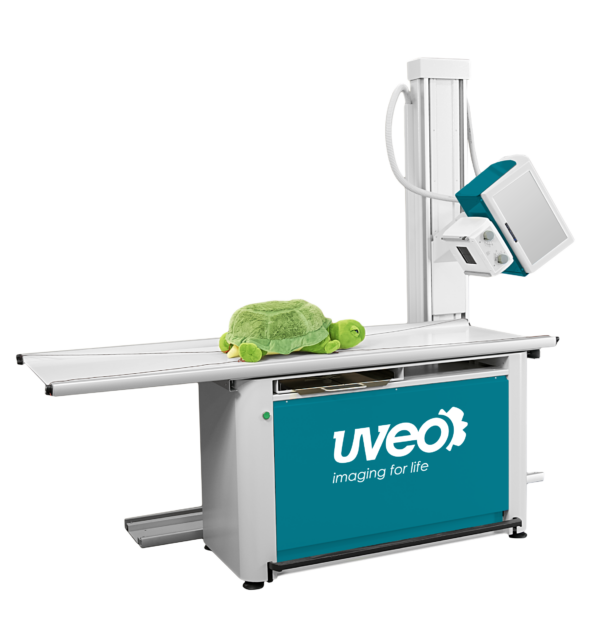
  • Floor track systems. Rather than a floating tabletop, a floor track setup moves the tube stand along a track mounted to the floor, which can suit clinics prioritizing a fixed, high-throughput imaging room layout. Intriquip’s Uveo HF400-FT floor track table is built for this configuration.

Uveo HF400-FT Floor Track X-Ray Table

  • Enhanced float range upgrades. Some systems, like the Uveo HF400 II Plus, offer a further-enhanced float range and secure table-top locking, worth considering if your practice handles larger or less cooperative patients regularly.

Neither configuration is universally correct — it depends on your exam room’s physical layout, your typical patient size range, and whether you’re retrofitting an existing room or building one from scratch.

Table Configuration at a Glance

 4-Way Float TabletopFloor Track SystemEnhanced Float Range
Patient positioningTable moves around a stationary patientTube stand moves along a fixed trackTable moves around a stationary patient, wider range
Best forFrequent repositioning, larger/painful patientsFixed, high-throughput room layoutsLarger or less cooperative patients
InstallationStandard tabletop installationRequires floor-mounted track hardwareStandard tabletop installation
Example systemUveo HF400 Complete PlusUveo HF400-FTUveo HF400 II Plus
Room layout impactModerate – table needs float clearanceHigher – track affects room designModerate – table needs float clearance

If you’re retrofitting an existing exam room rather than building one from scratch, tabletop-based systems (float or enhanced float) are generally easier to fit into a space that wasn’t originally designed around a track system.

Signs Your Current Setup Is Working Against You

A few signs suggest your table or generator configuration — not just your imaging technology — is the actual bottleneck:

  • Staff are physically lifting or repositioning patients more than the table is doing the work. If your current tabletop doesn’t float, or floats in a limited range, you’re likely spending more time and more physical effort per exposure than a properly configured system would require.
  • Your generator can’t consistently penetrate your largest patients. If certain views routinely come out underexposed or require a second attempt on bigger dogs or mixed-practice cases, that’s a power output problem, not a technique problem.
  • Dental cases are being awkwardly worked around your main system instead of using dedicated dental equipment, slowing down both dental and general imaging workflows.
  • You’re avoiding remote consultations because your current system doesn’t support network-based image sharing, even though a specialist opinion would help.

None of these are reasons to panic-buy a new system, but if two or more sound familiar, it’s a sign the room configuration itself — not just the age of your equipment — deserves a second look.

Generator Power: Matching kVp and mA to Your Caseload

Generator power specifications aren’t just a number on a spec sheet — they determine whether you can actually get a diagnostic image on the patients you see most:

  • Standard 110V AC installations are worth prioritizing if you want to avoid the cost of dedicated electrical wiring. Systems like the HF400 Complete Plus are specifically built to plug into a regular 110-volt, 15-amp outlet, which keeps installation costs down and simplifies retrofitting into an existing exam room.
  • Capacitor-based generators tend to offer a longer service life than battery-based systems and provide the high-performance output needed for consistent image quality across a full day of cases.
  • Network connectivity is worth checking before you buy — some fixed systems can connect to your clinic network for remote, web-based diagnostics, which matters if you plan to consult with a specialist or read images from another room or location.

Don’t Forget Dental: A Separate Imaging Need in the Same Suite

Dental radiography is a distinct piece of equipment from your main table-and-generator system, and it’s easy to underbudget for it when planning a new or renovated imaging suite. If your practice does regular dental work, a dedicated mobile dental x-ray unit — like the Dentalaire DC Mobile, with its ergonomic touchscreen control and aluminum positioning arm — lets you handle intraoral imaging without adapting your main table system for a job it wasn’t built for.

Fixed vs. Portable: A Quick Note on Scope

This guide focuses on fixed, in-clinic table and generator configurations. If your practice does regular farm calls, ambulatory equine work, or needs imaging capability outside a permanent room, that’s a different equipment category with its own tradeoffs around power source and detector ruggedization — worth a separate conversation with your supplier rather than trying to make a fixed system do double duty.

What to Compare Before You Buy

  1. Table type and float range — match this to your actual patient size range and positioning needs, not just what’s cheapest.
  2. Generator power and electrical requirements — confirm your exam room’s electrical setup matches what the system needs before you commit to an installation timeline.
  3. Network and software connectivity — worth prioritizing if remote consultation or specialist referral is part of your workflow.
  4. Dental imaging — budget for it separately if it’s part of your practice, rather than assuming your main system covers it.
  5. Installation and service support — ask what’s included in the purchase versus billed separately, and what happens if something needs repair down the line. Intriquip’s equipment repair services include factory-authorized warranty repairs and a loaner-equipment program, worth asking about regardless of which supplier you choose.
  6. Financing structure — a full table-and-generator setup is a meaningful capital investment. Intriquip’s overview of equipment financing options for Canadian clinics covers leasing and financing paths if you’d rather structure the purchase over time.

Frequently Asked Questions

Question: What’s the difference between a 4-way float table and a floor track system?

Answer: 4-way floating tabletop moves in multiple directions so the patient can stay still while the table repositions around them. A floor track system instead moves the tube stand along a fixed track, which can suit clinics prioritizing a permanent, high-throughput room layout over tabletop flexibility.

Question: Do I need a dedicated electrical installation for a veterinary x-ray generator?

Answer: It depends on the system. Some fixed generators are built to plug into a standard 110-volt, 15-amp outlet without additional wiring, while higher-output systems may require a dedicated circuit or more involved electrical work — confirm your exam room’s setup with an electrician before assuming a same-day install.

Question: Can my main x-ray system also handle dental radiography?

Answer: Not effectively. Dental imaging generally needs a dedicated mobile or wall-mounted dental x-ray unit built for intraoral positioning, rather than adapting a general table-and-generator system meant for full-body imaging.

Question: Is network connectivity worth prioritizing when choosing a fixed x-ray system?

Answer: If you plan to consult with a specialist remotely or want to read images from another room or location, yes — not every fixed system supports network-based remote diagnostics, so it’s worth confirming before you buy rather than assuming it’s standard.

Bottom Line

The table and generator you choose shapes your clinic’s imaging workflow for years, not just the next radiograph — table type affects patient positioning and staff time, generator specs determine whether your system can actually handle your caseload, and dental imaging needs its own budget line rather than an afterthought. None of this is covered in a clinical curriculum, which is exactly why it’s worth working through deliberately before you sign a quote.

If you want to configure a table-and-generator setup around your specific exam room and caseload, Intriquip’s veterinary x-ray systems team can walk through the options.


Choosing Veterinary Equipment for Growth, Reliability, and Better Patient Care: A Practical Guide for Canadian Clinics

featured image 1776610903

Choosing Veterinary Equipment for Growth, Reliability, and Better Patient Care: A Practical Guide for Canadian Clinics

Choosing veterinary equipment in Canada isn’t just about ticking boxes—it can shape how your clinic grows and cares for patients. When you pick the right tools, you protect uptime, manage costs, and support your team’s skills. This guide breaks down how to choose veterinary equipment that fits your clinic’s needs now and as you expand, making every investment count. Let’s explore the practical steps that will help your clinic thrive. Learn more.

Evaluating Equipment for Growth

image 934397c0f48fa0c80eac

Selecting the right equipment is crucial for your clinic’s growth and success. Let’s dive into how you can evaluate the best options for your needs.

Assessing Your Clinic’s Needs

Start by understanding what your clinic truly requires. Consider your current services and the ones you plan to introduce. For instance, if you’re adding new diagnostic services, you’ll need specific equipment like ultrasound systems. Ask yourself: What services do patients frequently require? Which equipment will enhance these services? Prioritize tools that align with your service offerings and patient needs.

A practical approach is to create a list of essential equipment. Include items like X-ray machines for diagnostics, surgical tables for procedures, and patient monitors for ongoing care. Tip: Use resources like this veterinary equipment guide to ensure nothing is overlooked.

Planning for Future Expansion

Growth is not just about current needs but also future possibilities. Consider where your clinic aims to be in the next five years. Will you offer more specialized services? If yes, plan to acquire equipment that supports these goals. Pro tip: Invest in scalable equipment that adapts to your expanding services.

For instance, choosing modular equipment systems allows for easy upgrades as your clinic grows. This flexibility ensures you are not locked into outdated technology, saving costs in the long run. Most clinics find that planning for expansion helps in making informed decisions today.

Balancing Cost and Quality

Balancing cost with quality is a key challenge in equipment selection. While it might be tempting to go for cheaper options, consider the long-term impact. Quality equipment might have a higher upfront cost but offers durability and better performance over time.

Evaluate the total cost of ownership (TCO), which includes maintenance and repair costs. Here’s the key insight: Investing in reliable equipment reduces downtime and repair expenses. By choosing quality, you’re ensuring that your clinic runs smoothly without costly interruptions.

Ensuring Reliability and Uptime

image 87921a0131e08be7a46c

Ensuring your equipment runs smoothly is vital for maintaining uptime. Let’s explore how you can achieve this.

Importance of Preventive Maintenance

Preventive maintenance is your first line of defense against equipment failure. Regular check-ups help identify potential issues before they become major problems. Did you know? Clinics that schedule regular maintenance experience up to 50% fewer unexpected breakdowns. This proactive approach saves you time and costly repairs.

Create a maintenance schedule for each piece of equipment. Include tasks like cleaning, calibration, and minor repairs. This routine not only extends the life of your equipment but also ensures it operates at peak efficiency.

Choosing Reliable Equipment Suppliers

Partnering with trusted suppliers is crucial. Look for suppliers with a track record of reliability and excellent customer service. A good supplier provides quick support and has a robust service network. Most people think all suppliers are the same, but choosing the right one can make a significant difference in your clinic’s operations.

Intriquip Instruments, for example, offers over 30 years of experience, ensuring you get dependable equipment and support. Having a reliable partner means you’re never alone in managing your equipment needs.

Managing Total Cost of Ownership

Understanding the total cost of ownership helps you budget effectively. TCO includes purchase price, maintenance, repairs, and operational costs. Here’s an important step: Compare TCO across different equipment options before making a decision. This comparison gives you a clearer picture of what you’ll spend over time.

Opt for energy-efficient equipment, which can lower operational costs significantly. By managing TCO, you ensure that your clinic remains financially healthy while providing top-tier care.

Enhancing Patient Care with Equipment

intriquip a277b66d5aedd23078c2

Improving patient care should be a top priority when choosing equipment. Let’s see how the right tools can make a difference.

Selecting Advanced Diagnostic Tools

Advanced diagnostic tools like digital radiography or ultrasound systems improve diagnostic accuracy. These tools help you identify issues faster, leading to quicker treatments. Example: A high-quality ultrasound machine allows for detailed imaging, aiding in precise diagnoses.

When choosing diagnostic equipment, consider its ease of use and compatibility with your current systems. This ensures seamless integration into your workflow, enhancing your team’s efficiency.

Improving Surgical and Exam Efficiency

Efficiency in surgery and exams translates to better patient outcomes. Invest in equipment like surgical tables and lighting that enhance visibility and precision. Did you know? Clinics with modern surgical setups report higher patient satisfaction scores.

Ensure your exam rooms are equipped with tools that streamline processes. Efficient setups reduce procedure times, allowing you to see more patients and provide timely care.

Training and Support for Clinic Staff

Equipment is only as good as the people using it. Providing your staff with comprehensive training ensures they use the tools effectively. Well-trained staff can operate equipment confidently, improving patient care and safety.

Consider enrolling your team in training programs offered by your equipment supplier. These programs cover everything from basic operation to advanced troubleshooting. With the right training, your staff becomes an asset to your clinic, maximizing the equipment’s potential.

In conclusion, choosing the right veterinary equipment in Canada is essential for clinic growth, reliability, and patient outcomes. By evaluating your needs, ensuring reliability, and focusing on patient care, you position your clinic for long-term success. Remember, the right equipment is an investment in your clinic’s future.

Choosing Diagnostic Equipment That Grows With Your Veterinary Clinic: A Practical Guide for Canadian Owners

featured image 1773086426

Choosing Diagnostic Equipment That Grows With Your Veterinary Clinic: A Practical Guide for Canadian Owners

Choosing the right veterinary diagnostic equipment can feel overwhelming, especially when your clinic needs tools that keep pace with growing demands. You want devices that work reliably today and adapt as your caseload changes. This guide will help you evaluate options like digital X-ray systems, veterinary ultrasound, and patient monitors, so your clinic stays prepared for every challenge ahead. Let’s explore practical tips tailored for Canadian veterinary clinics to make confident equipment choices. For further insights, you can check out this essential guide.

Selecting the Right Diagnostic Equipment

image 47921c0d99d9ef1eb606

Choosing the right equipment is more than just a purchase; it’s an investment in your clinic’s success. Let’s dive into how to choose the best tools for your needs.

Understanding Your Clinic’s Needs

First, you need to assess what your clinic really requires. Consider the types of animals you treat most often. Do you handle more complex cases that need advanced imaging? It’s important to think about your clinic’s specific needs, including the frequency of use for each type of equipment. For more on evaluating these needs, check out this article.

Evaluating Versatile Diagnostic Tools

When choosing diagnostic tools, versatility can be key. You want machines that can handle various tasks. For example, some ultrasound machines can be used for both small and large animals, making them adaptable to changing needs. Look for tools that offer flexibility without compromising on performance. The key insight is to select equipment that can grow with your clinic’s demands.

Ensuring Reliable Equipment Performance

Reliability is crucial. You need equipment that performs well and doesn’t break down frequently. Check for machines with good reviews and those known for durability. Consider brands with a proven track record in veterinary settings. After all, the longer you wait to ensure dependable equipment, the more it can impact your clinic’s efficiency. For an in-depth look at reliable options, visit this resource.

Key Equipment Categories for Clinics

image 2901593290cf9ae09005

Now that you have a clear understanding of your needs, let’s look at specific equipment categories crucial for veterinary practices.

Investing in Digital X-Ray Systems

Digital X-ray systems are a must-have for modern clinics. They provide quick and accurate images, helping you diagnose conditions faster. These systems are also more efficient than traditional film-based ones, saving you time and resources. For example, digital systems can reduce the time spent on each X-ray by up to 30%, allowing for more patient throughput. Interested in learning more about X-ray systems? Check out this comprehensive guide.

Exploring Veterinary Ultrasound Options

Ultrasound machines offer non-invasive ways to see inside a patient’s body, making them invaluable in diagnosing various conditions. They are great for pregnancy checks, heart exams, and more. Look for machines with multiple probes to cover different types of examinations. Remember, most people think only large clinics need ultrasound, but even small practices can benefit from this versatile tool. For insight into the latest ultrasound technology, visit here.

Benefits of Veterinary Endoscopy

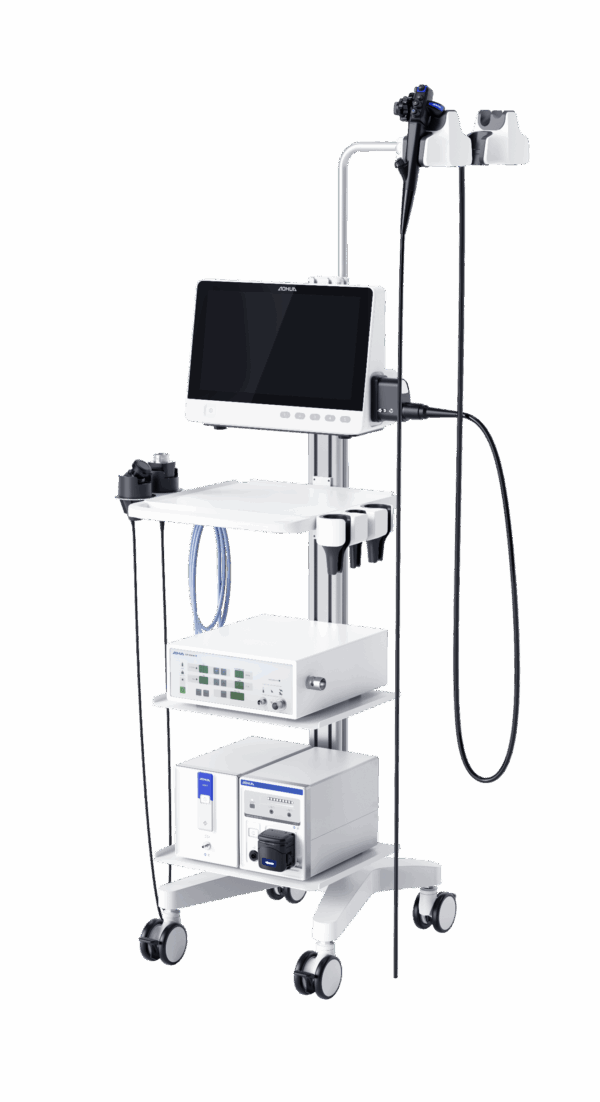
Endoscopy allows for detailed internal views without surgery. This tool can be used to examine the gastrointestinal system, retrieve swallowed items, and more. It’s less invasive, leading to quicker recovery times for patients. If you’re thinking of expanding your diagnostic capabilities, adding an endoscope can be a game-changer.

Long-term Support and Financing

image 8575676b1abdb8b17e8e

Having the right equipment is one thing, but maintaining it and managing costs is another crucial aspect.

Comprehensive Equipment Maintenance and Service

Regular maintenance is key to keeping your equipment in top shape. Partner with providers who offer comprehensive service plans. This not only prolongs the life of your machines but also ensures they are always ready when you need them. A good maintenance plan can save you up to 20% on repair costs annually.

Accessing Veterinary Equipment Financing in Canada

Financing can help manage upfront costs, making it easier to acquire essential equipment. Look for flexible financing options that suit your budget. Whether you’re a new practice or upgrading, having financial support can ease the process. Remember, smarter financing can help you get the best equipment without stretching your finances.

Partnering with Intriquip Instruments

At Intriquip, we believe in building lasting partnerships with our clients. We offer tailored solutions that fit your clinic’s unique needs, from planning and installation to ongoing support. Our experience and dedication make us a trusted partner for your veterinary equipment needs. Let us help you make informed decisions that will benefit your clinic in the long run.

In summary, selecting the right diagnostic equipment involves understanding your clinic’s specific needs, choosing versatile and reliable tools, and ensuring long-term support and financing are in place. Make these decisions with confidence, and your clinic will be well-equipped to meet the challenges of today and tomorrow.

Top considerations for selecting scalable and reliable veterinary diagnostic equipment in Canadian clinics

featured image 1772481769 scaled

Top considerations for selecting scalable and reliable veterinary diagnostic equipment in Canadian clinics

Choosing veterinary diagnostic equipment in Canada is more complex than it looks. Clinics need tools that grow with their practice and stand up to daily demands without costly downtime. In this post, you’ll find clear criteria for picking scalable veterinary equipment—from digital radiography vet systems to ultrasound and patient monitors—that fit your clinic’s unique needs. Let’s help you make confident choices that keep your clinic reliable and ready for the future. For more insights, check out this guide.

Choosing Veterinary Diagnostic Equipment

various essential instruments for examining hearin 5008dddcd5af5c9d69eb

Selecting the right diagnostic equipment is essential for any veterinary clinic. Let’s explore critical factors that ensure your clinic is equipped for success.

Understanding Scalability and Reliability

Scalability and reliability are like the backbone of your clinic’s operations. Equipment should scale with your growth and remain reliable over time. Why do these factors matter? Without them, you risk costly downtimes and inefficiencies.

When considering scalability, think about future growth. Will your current equipment handle an increased patient load? Reliability ensures your equipment doesn’t fail during critical moments. Durable equipment reduces repair and replacement costs, keeping your operations smooth.

To make smart choices, consider equipment that offers upgrades and flexible usage options. Look for machines known for minimal breakdowns and consistent performance. This approach keeps your clinic running efficiently and effectively.

Importance of CSA Certification

CSA Certification is more than a badge; it’s a symbol of quality and safety. Why should it matter to you? It guarantees that the equipment meets Canadian standards, ensuring safety and performance in your clinic.

Choosing CSA-certified equipment means you are opting for products that have undergone rigorous testing. This certification reassures you that the equipment is less likely to cause issues, protecting both staff and patients.

In your decision-making process, prioritize finding equipment with CSA certification. It will not only ensure compliance with regulations but also give you peace of mind knowing you’re investing in quality.

Equipment Types and Their Benefits

image d410be095739ef9ec06a

Different types of equipment serve various purposes in a veterinary clinic. Understanding their benefits helps make informed decisions.

Digital Radiography and X-ray Systems

Digital radiography and X-ray systems are pivotal in diagnostics. Their benefits are clear: they offer fast and accurate imaging, enhancing diagnosis and treatment plans.

Digital systems reduce the waiting time as they produce images instantly. This speed allows for quicker decisions during emergencies. They also offer better image quality, which leads to precise diagnoses.

Considering a switch to digital systems? Remember, they might require a higher initial investment, but their efficiency pays off in the long run. They minimize the need for retakes, reducing exposure to radiation for both pets and staff.

Ultrasound and Endoscopy Solutions

Ultrasound and endoscopy bring your diagnostics to the next level. They provide non-invasive ways to view internal structures, reducing the need for exploratory surgery.

Ultrasound is versatile, used for everything from pregnancy checks to organ examinations. Endoscopes allow for detailed inspections of internal areas without large incisions. They offer a gentle approach for both diagnosis and treatment.

Opt for equipment that integrates well with your existing systems. This ensures smooth operation and data management, improving overall clinic performance.

Patient Monitoring Essentials

Patient monitoring is crucial during surgeries and recovery. Reliable monitors track vital signs, alerting you to changes instantly.

Invest in monitors that offer real-time data and comprehensive alerts. This information is vital for making quick, informed decisions during critical moments. Portable options can be beneficial for flexible, on-the-go monitoring.

When choosing monitors, consider those with multifunctional capabilities. They save space and reduce the complexity of managing multiple devices.

Partnering with Intriquip Instruments

image 91bf0179da51a4d573bf

Choosing the right equipment is just the start. Partnering with Intriquip ensures long-term support for your clinic’s success.

Comprehensive Service and Support

Intriquip offers more than equipment; they provide ongoing service and support. Why is this important? It ensures your equipment remains in top condition, reducing downtime and stress.

Their team offers expert advice tailored to your clinic’s specific needs. Whether it’s maintenance or troubleshooting, you’re covered with reliable support.

Financing Options for Canadian Clinics

Worried about costs? Intriquip provides flexible financing options. This helps manage expenses without compromising on quality.

Their plans are designed to fit various budgets, ensuring you can access the best equipment without financial strain. Explore their options to find a plan that suits your clinic’s needs.

Booking a Planning Consultation

Ready to make informed decisions? Book a consultation with Intriquip. They offer personalized guidance, ensuring your clinic’s specific requirements are met.

This consultation provides a comprehensive assessment of your needs, helping you choose the right equipment. With Intriquip, you’re not just buying equipment; you’re gaining a trusted partner for your clinic’s success.

In summary, choosing the right diagnostic equipment involves understanding scalability, reliability, and certifications. Exploring various equipment benefits and partnering with trusted providers like Intriquip Instruments ensures your clinic operates efficiently and effectively.

Smarter Diagnostics for Canadian Clinics: Emerging Technologies You Can Trust

featured image 1770667286 scaled

Smarter Diagnostics for Canadian Clinics: Emerging Technologies You Can Trust

Old diagnostic tools slowed your clinic’s workflow and left room for costly errors. New veterinary diagnostic equipment changes that by speeding up results while improving accuracy. In this post, you’ll learn how digital radiography DR, portable X-rays for vets, and veterinary ultrasound Canada options can fit your clinic’s needs—with expert guidance from Intriquip Instruments every step of the way. For more insights, check out this link.

Emerging Veterinary Technology Trends

veterinarian examining ultrasound scan of dog in v dfb51778a67c45d2ca59

The world of veterinary medicine is rapidly advancing, bringing new technology that boosts both speed and accuracy. This evolution is crucial for Canadian clinics striving for excellence.

Enhancing Diagnostic Speed and Accuracy

Imagine receiving precise results faster than ever before. Digital radiography (DR) and veterinary ultrasound offer this promise. They capture high-resolution images swiftly, allowing you to diagnose conditions with confidence. A clinic in Vancouver recently integrated DR into their workflow and reported a 30% reduction in diagnosis time. This means less waiting and faster treatment for your patients. Dive deeper into these advancements in this article.

Streamlining Workflow in Canadian Clinics

Efficiency isn’t just about speed—it’s about smooth operations. Portable X-ray machines bring diagnostics directly to the patient, minimizing disruptions. With point-of-care ultrasound (POCUS), you can make quick decisions right by the examination table. Most clinics find that these tools cut down patient movement and stress significantly. By adopting these technologies, you can streamline your workflow and focus more on patient care.

Building Trust with Reliable Equipment

Trust is built on consistency. Intriquip Instruments offers equipment that delivers reliable results time after time. With every use, your team gains confidence, knowing the tools won’t fail when needed. This reliability helps foster trust with your clients, as they see you using the best technology for their pets.

Adopting New Diagnostic Tools

ultrasound monitor with fetus pictures ultrasound 6f23577fbd51e0daee6b

Integrating new equipment into your clinic can be daunting, but it’s a step toward a more efficient future. Let’s explore what adopting these tools involves.

Choosing Reliable Veterinary Diagnostic Equipment

Selecting the right equipment starts with understanding your clinic’s specific needs. Whether it’s veterinary endoscopes or vet patient monitors, Intriquip offers guidance to help you make informed decisions. A clinic in Toronto recently upgraded their imaging tools with our assistance, resulting in a 20% increase in diagnostic capability. When you choose equipment that matches your workflow, you enhance your clinic’s overall performance.

Training and Support for Clinic Staff

New equipment brings new learning curves. That’s why comprehensive training is essential. Intriquip provides hands-on training sessions, ensuring your team is comfortable and confident with the technology. A well-trained staff means fewer errors and smoother operations. This support doesn’t stop after installation; we’re here for ongoing guidance whenever needed.

Long-Term Service and Maintenance Support

Equipment is an investment, and maintenance is key to longevity. Intriquip offers robust service packages, ensuring your tools remain in top condition. With regular check-ups and prompt repairs, you minimize downtime and maximize productivity. Trust our 30 years of experience to keep your clinic running smoothly.

Planning and Financing Diagnostic Solutions

xray machine in a veterinary clinic c0b40215b7c512b24455

Every clinic has different financial needs and constraints. Planning and financing are crucial steps in adopting new technology.

Clinic Equipment Planning with Intriquip Instruments

Planning begins with a clear understanding of your clinic’s needs. Intriquip assists in designing a layout that optimizes space and workflow. We work with you to create a detailed plan that aligns with your budget and goals, ensuring you get the most out of your investment. Our expertise guarantees a seamless integration of new equipment.

Flexible Financing Options for Veterinary Clinics

Budget constraints shouldn’t hinder progress. Intriquip offers flexible financing plans tailored to your clinic’s needs. Whether you’re buying new equipment or upgrading existing tools, our options help you manage costs effectively. Many clinics find our financing solutions alleviate financial pressure, allowing them to invest in better care.

Installation and Training Packages Available

Once you’ve chosen your equipment, our comprehensive packages ensure everything is set up efficiently. We handle the installation, provide detailed training, and offer ongoing support. This holistic approach ensures you and your team can focus on what matters most—your patients. With Intriquip by your side, you’re never alone in this journey.

In summary, embracing new diagnostic tools isn’t just about keeping up with technology—it’s about enhancing patient care and clinic efficiency. With reliable equipment, comprehensive support, and flexible financing, Intriquip is here to help you every step of the way.