
Day: 3 January 2024

Space Saving Vet Equipment: Check Out Intriquip’s Top 5 Pieces

Veterinarian examining a white cat's teeth during a routine check-up

Every veterinarian would love to have an enormous clinic with room for every piece of equipment they could ever want, room to house numerous patients and enough space for all your staff to be comfortable, but that is not always possible. Most vets put their equipment on the line first when they are trying to save space in their clinic, but maybe you do not have to. Let’s check out Intriquip’s top 5 pieces of space-saving equipment for 2024.


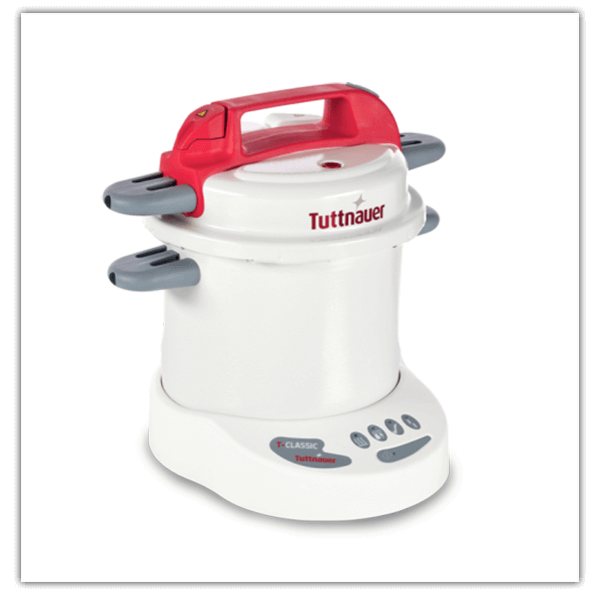
1. The T-Classic 9 Steam Sterilizer
tuttnauerclassict9 1

Designed specifically with small clinics in mind, Tuttnauer’s T-Classic 9 Steam Sterilizer is a perfect space-saving piece of equipment. Being one of the lightest autoclaves available, weighing in at a whopping 11.7 pounds, it also requires minimal counter space.

Being so light, the T-Classic 9 can easily become portable or can be tucked away when in need of extra counter space. Not only does it save you space but works super efficiently too, running an unwrapped cycle in as little as 18 minutes. With one simple touch, the T-Classic 9 will run its automatic cycle and run until complete.

Manufactured with an electronic detector, the autoclave will turn itself off if water levels are insufficient. Also having a thermal fuse protects against overheating and electrical faults. If you are looking for a space-saving autoclave with fast cycle times, Tuttnauer’s T-Classic 9 Steam Sterilizer is for you!


2. M2300 and M2500 Wall Mounted Veterinary Anesthesia Machines

M2300 Gradient 3000 1

Need extra space in your surgery room or require additional space around your workstation? Look no further than the M2300 and M2500 Wall Mounted Veterinary Anesthesia Machines.

Supera’s M2300 comes with their patented safety pop-off valve, which is a huge asset to any anesthesia system. Mounting on 16-inch centers, the M2300 can be tucked away tightly against a wall saving space for other equipment, your patients, and you, with a 0-4 LPM oxygen flowmeter with mechanical stop control, an oxygen flush with safety restrictor, and a CO2 absorber with easy change ‘One Seal’ Canisters.

Having all the same advantages as the M2300, the M2500 has a built-in articulating arm. Extending to 28-inches and a full 180 degrees of movement, the M2500 can be placed in any busy room and be easily reached for whatever application is needed. Both the M2300 and M2500 Wall Mounted Veterinary Anesthesia Machines are a great way to get your anesthesia off the floor and save space in your clinic.


3. Classic Folding Wall-Mounted Exam Tables
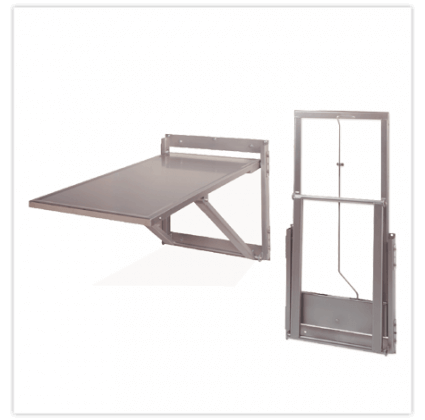
Having exam tables in a small room can be difficult when examining larger animals, or animals with high anxiety. Transform your exam rooms with the Classic Folding Wall-Mounted Exam Tables. Coming in either Lateral or Longitudinal, Classic Folding Wall-Mounted Exam Tables can be folded up against the wall leaving you with ample floor space.

Easy-to-use lock and release handles allow you to lower the table and lock it into place in either the extended or folded position. The Classic Folding Wall-Mounted Exam Tables are manufactured with high-quality stainless-steel to ensure a long lifespan and safety for both you and your patients, with the underside of the table containing a Melamine Finish, helping to repel any moisture that the table may encounter.


4. Ceiling Mounted Exam and Surgery Lights
large MI1000 Dual

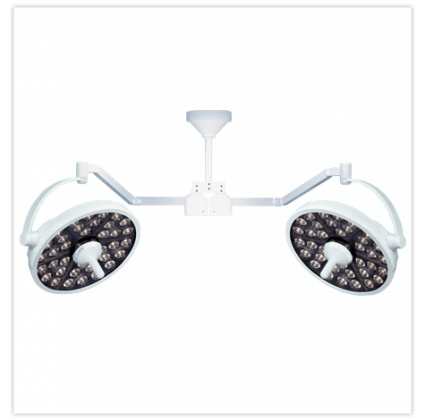
Having sufficient lighting in exam and surgery rooms is a must in all clinics, but portable and even wall-mounted lights can get in the way while performing examinations and surgeries. The MI-550, MI-750, and MI-1000 single or dual head, ceiling-mounted lights are a great alternative. The MI-550 was specifically designed for exam rooms and has an output rated at 50 000LUX at 24 inches.

For surgery rooms, choose between MI-750 with an output rated at 75 000LUX at 1 meter, or the MI-1000 with an output rated at 100000LUX. All three have long-life LEDs rated for 50 000 hours that are high efficiency, consuming less than half the electricity consumed by regular Halogen bulbs. 4 300K pure white illumination allows you to see your patients perfectly. Having near zero radiant heat, not only are these lights space-saving but energy efficient and cost-effective for all clinics.


5. Regal Vet-Mate Gurney
 

large vet mate gurney png

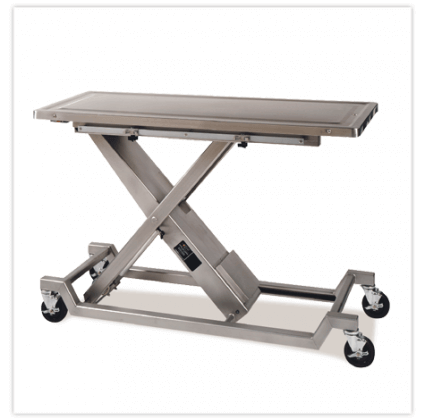
Finding equipment that saves space in a clinic when you need so many different types of tables and enough counter space for small equipment can be challenging. The Regal Vet-Mate Gurney can prove very useful in these situations. Designed to be a transport lift gurney, the Regal Vet-mate Gurney can be used as a transport table, prep table, lift table, additional counter space, or even an emergency operation table.

Lowering to as low as 10.25 inches and extending as high as 42 inches, when not in use the gurney can be lowered right down and tucked under another table, cabinet, or bench. Lift and lower the gurney with ease as the scissor-action electronic lifting mechanism is operated by a rechargeable battery. Recharging the Regal Vet-Mate gurney is fast and efficient with its built-in charger. Manufactured with heavy-gauge stainless-steel and Heli-arc welded joints ensures for a long-lasting table.

No matter what table you are in need of, the Regal Vet-Mate Gurney is a great all-in-one choice that also saves tons of space in your clinic.

Calling all Clinics: Save Space with Intriquip

No matter what size your clinic or hospital may be, these 5 pieces of equipment can make the world of difference in any clinic that needs a little extra room. All Veterinarians and Veterinary Technicians are constantly busy worrying about the health and safety of their patients, not if they have room in the counter for the autoclave. Check out each one of these products on Intriquip’s website, or reach out to anyone of us here for more information on space saving equipment and how we can help you transform your clinic today!

Choosing the Right Vet Microscope: Stereo vs. Compound

Vet clinic staff examining a sample with a stereo microscope

Choosing a new microscope for your veterinary practice? You’re likely weighing options between stereo and compound microscopes, while also considering camera compatibility and various other features. Selecting the right microscope is crucial but can be overwhelming. In Intriquip’s guide, we’ll highlight the differences and key factors to consider, helping you make an informed decision for your clinic. Let’s start by understanding what a stereo microscope is and how it differs from its compound counterpart..

What is a Stereo Microscope?

A stereo, stereoscopic, or dissecting microscope is an optical microscope designed for low-magnification observation. Stereo microscopes typically use reflected light that bounces off the surface of an object, rather than light being transmitted through an object.

What this really means, is that a stereo microscope shows a 3D or three-dimensional image of whatever microscopic material you are looking at. Commonly, the specimen is visible to the naked eye when using a stereo microscope.

Stereo microscopes work with a sample in real-time and can really be used by anyone who needs to take a closer look at a small object. Veterinarians and their technicians generally use stereo microscopes for dissection or micro-surgery.

Common Characteristics of a Stereo Microscope

  • Two separate objectives with two separate optical paths
  • Produces three-dimensional images
  • Uses light reflected from an object or specimen
  • Magnification ranges from 10x – 50x

What is a Compound Microscope?

Compound microscopes obtain higher levels of magnification and help to diminish chromatic aberration. Compound microscopes use two lenses; one being found in the objectives and one in the eyepieces. Objectives on a compound microscope have a short focal length and are located quite close to the subject, aiding in collecting light to focus on the image.

The second lens, located in the eyepiece, has a much longer focal point. This allows the image to appear much more enlarged. Compound microscopes are often referred to as biological microscopes, phase contrast microscopes, polarizing microscopes, metallurgical microscopes and fluorescence microscopes. Breaking that down, compound microscopes are used to see a 2D or two-dimensional image.

How does a compound microscope differ to stereo?

Unlike stereo microscopes, compound microscopes use light to see in or through a subject which is called light transmission. Most compound microscopes have three or four objectives ranging in magnification from 4x, 10x, 40x, and 100x. Having the second lens in the eyepieces, the total magnification is 40x, 100x, 400x, and 1000x.

Most people have used some form of compound microscope before, usually in a science or biology class in school. Doctors and scientists use compound microscopes to look at bacteria, plant cells, animal cells, chromosomes and even thin layers or slices of organs and tissues. Many veterinarians use compound microscopes in a similar matter typically looking at animal cells, organs, tissues, bacteria and more.

Common Characteristics of a Compound Microscope

  • Two or more convex lenses
  • Magnification ranges from 40x – 1000x
  • Only one objective can be used at a time
  • Produces two-dimensional images
  • Available in monocular, binocular, trinocular and multi-head options

Microscope Cameras

Microscope cameras record whatever specimen is being viewed under the microscope in real time. Images or recordings of your microscopic material can be displayed on a digital screen, stored for record-keeping, or shared over the internet in research papers or blog articles. Typically, being used on compound microscopes, there are four common types of microscope cameras.

Phone mount

Simple yet extremely functional, you can easily use your smartphone as a camera for your microscope with the phone mount. Phone mounts usually mount to the top of the scope. You would simply place your smartphone in the mount, so your camera is looking into the eyepiece. You should then see the specimen you looked at through the eyepiece on your smartphone, allowing you to photograph or video it.

Eyepiece camera

Use an eyepiece camera by attaching the small camera to the eyepiece of your microscope. Using a USB port, the eyepiece camera will connect to a computer monitor where you can view and save the images of your microscopic material.

CCD Camera

Also known as a Charge-Coupled Device Camera, you can easily attach it to a Binocular microscope with a c-mount adapter or a Trinocular microscope with its built-in c-mount adapter. Similar to eyepiece cameras, CCD Cameras will connect to your computer monitor via a USB port. Unlike eyepiece cameras or phone mount cameras, CCD Cameras produce better image quality because of the higher megapixels.

DSLR Camera

DSLR Cameras are also known as Digital SLR Cameras. These cameras require two adapters, a c-mount adapter, and a camera-specific SLR adapter; working best on Trinocular microscopes because of the weight. DSLR cameras have the finest image quality and are a great option when needing to capture images of your subjects.


What to Consider When Purchasing a New Microscope

Veterinarian using a compound microscope in a clinic setting

When purchasing a new microscope, there are many things you need to consider to make sure you are getting the right scope for your practice. Knowing what application you need the microscope for is going to be the first crucial thing to consider.

Some subjects require unique magnification, distinct lighting, and some even require a heated stage. Viewing specimens that require a microscope with particular features can be challenging or even impossible. Knowing roughly what material you will be viewing day to day can aid in your decision about what microscope is going to be the one for your clinic.

User Training and Microscope Maintenance

Another factor to consider is knowing who is going to be using the microscope and what qualifications or training they have. Microscopes can be relatively expensive and require adequate maintenance and cleaning to keep it running smoothly and for a long time. Someone without proper training may not realize this, which can cause damage to an expensive piece of equipment. Providing sufficient training on a new microscope to any and all staff who are going to be using it can help ensure a long lifetime for your microscope.

Evaluating Microscope Features

Once you know what specimens you will be looking at from day to day, you need to consider the different features every microscope offers. No microscopes nor their features are going to be the same. One main feature to look at when purchasing a new microscope is the head. Most commonly, you will find Monocular, Binocular, and Trinocular microscope heads. Another feature to consider is what focus the microscope comes with. Some scopes come with just a coarse focus dial while others have both a coarse and fine focus dial. Lastly, another common feature to consider is the light source.

Microscopes can have LED, Halogen, Tungsten/Incandescent, Fluorescent, or Natural/Sunlight to illuminate a subject. Again, many specimens require different light forms, so knowing what light source is going to work best for those subjects is necessary when purchasing a new microscope.

Intriquip: Your Equipment, Our Passion

After determining what specimens you are going to be looking at from day to day, you’ll be better equipped in choosing a vet microscope with the necessary features. With the numerous options available, considering who will operate the microscope and their skillset, along with whether a microscope camera is essential, are crucial steps in the purchasing process.. Reach out to Intriquip today to talk more about what microscope is going to best suit your practice.